
Hook / Introduction
For a long time, teachers and adults made made feel like my ADD/ADHD was something I was embarrassed about. I'm done with that framing. This post is for ADD/ADHD adults, technical builders, and creatives who are still stuck at the I should be more productive loop.
Here's the reframe I want you to hold for the rest of this post: you are not broken. I used to think of my attention as fragile and something I needed to treat like a sickness with symptoms that I learned how to cope with. I reduced stimulation, reduced inputs and put on deep focus music to start working. What would take someone without my ADD/ADHD symptoms a few minutes to start work takes me 20-30 minutes to get my head in the game. Losing that focus with distractions or interruptions would cost me another 5-15 to get back into the deep focus flow again. I was constantly avoiding my ADD/ADHD natutre, and because I practiced avoidance and conditioned myself to think like others I think it took me a while to find this approach.
The Problem
The problem is that our attention is not broken; we were just trained to treat ourselves as broken.
From the first school bell to the first performance review, the message was consistent: you need to focus, you need to sit still, you need to do it like everyone else. That message doesn't just describe a symptom — it builds a framework where every scattered thought is evidence of failure. And that framework shapes the advice we get: take a pill, force the focus, white-noise your way through the day. All of it designed for a brain that already thinks linearly.
For a mind that iterates, diverges, and queues ideas in parallel, "focus harder" is like telling a sprinter to run a marathon at a steady pace. The sprinter isn't broken. The track is wrong.
That's the reframe this post is built on: stop fixing the brain. Fix the workflow around it.
How do you measure productivity to make this claim?
Before 2023
I track my productivity using a few metrics. The easiest one is number of total written lines of code. On average I could generate 40k–80k lines of high-quality software in six months, and that was a good, competitive speed for the last 20 years. Now with this approach, I'm averaging 500–900k lines a week and will pass 5M total lines in the last six months in just 1 git project. Not because I got disciplined or started taking some hot new doctor prescribed ADHD-SuperMedince just passed fda phase 3 trials, but because I stopped fighting my brain. I now get out of the way and let my stream of conciousness run as fast as it wants and that has made all the difference.
I have 13+ years of public github data with >160 git repos, I have a repo with >1200 stars, and I have starred 1600 repos. I have spent a lot of my career looking and studying code:
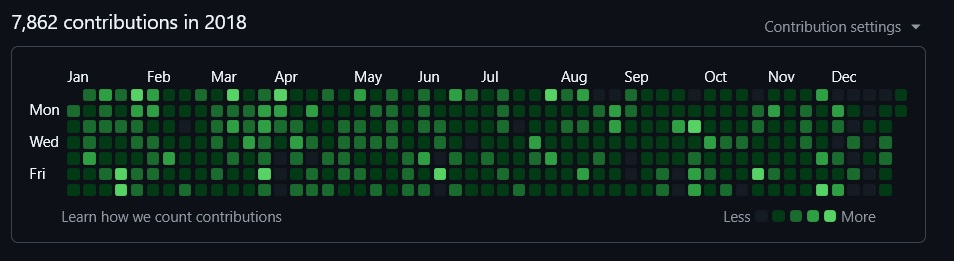
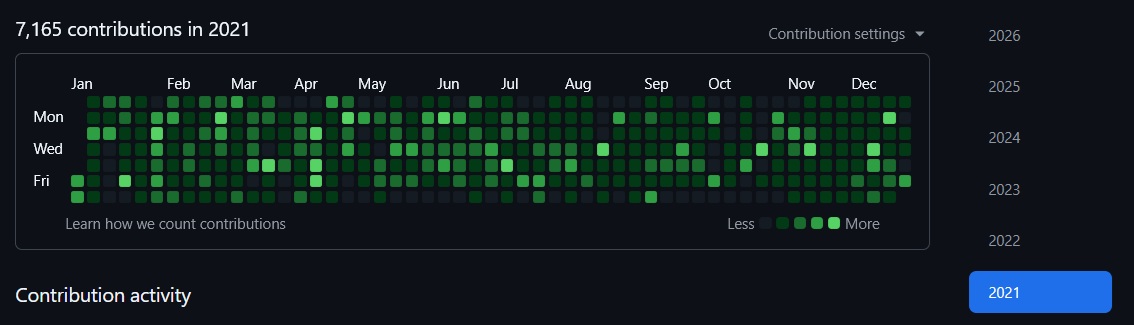
My Stock Analysis Engine repo with 1200 stars has ~150K lines of code and I authored 600 commits in ~6 months (most was from a private repo that I gave to the public opensource one): 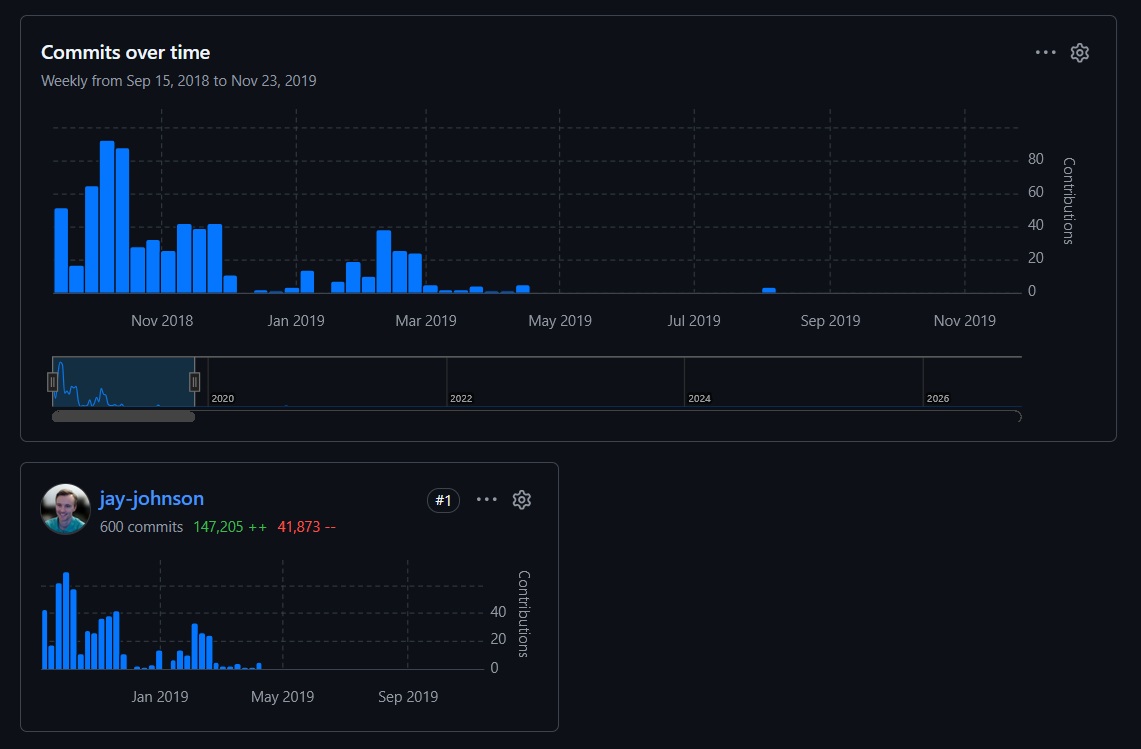
After 2023 with AI
Here are some screenshots from one of the private gitea servers I used for showcasing this emerging productivity pattern:
I am building a new type of operating system (OS). An OS is not something I could build before AI, because it takes too long to build/test. I've co-authored 2000 commits multiple AIs and we are approaching ~5 million lines of code in 6 months in 1 repo.
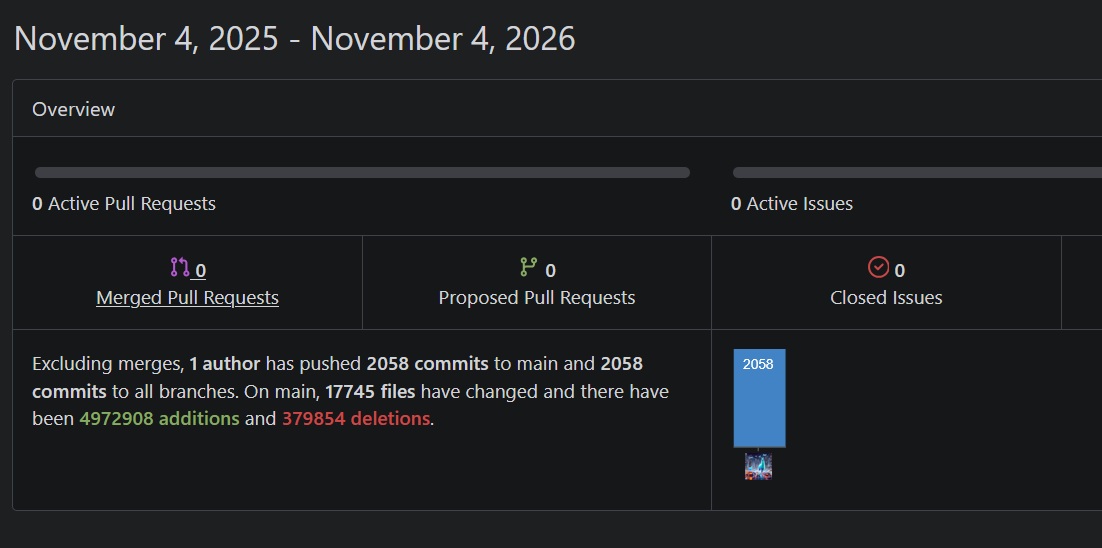
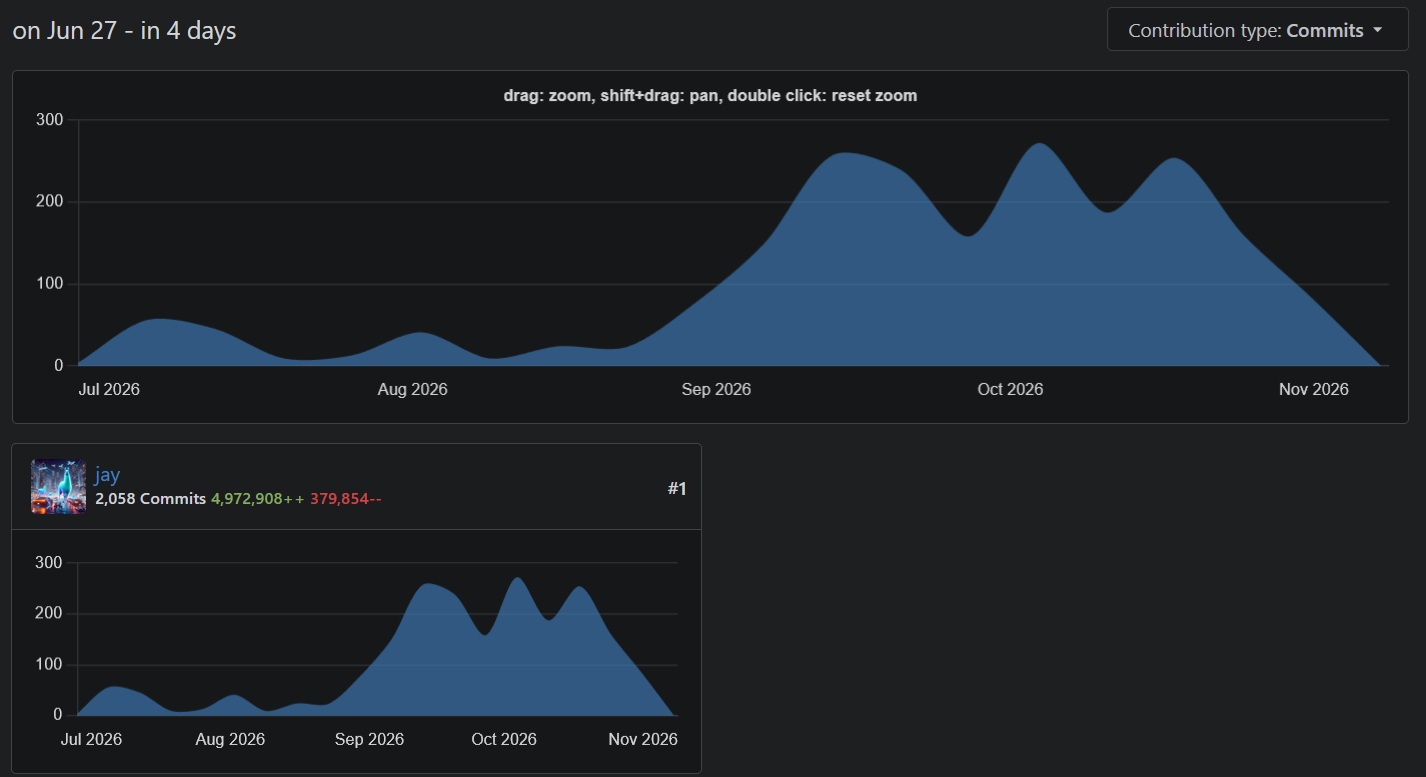
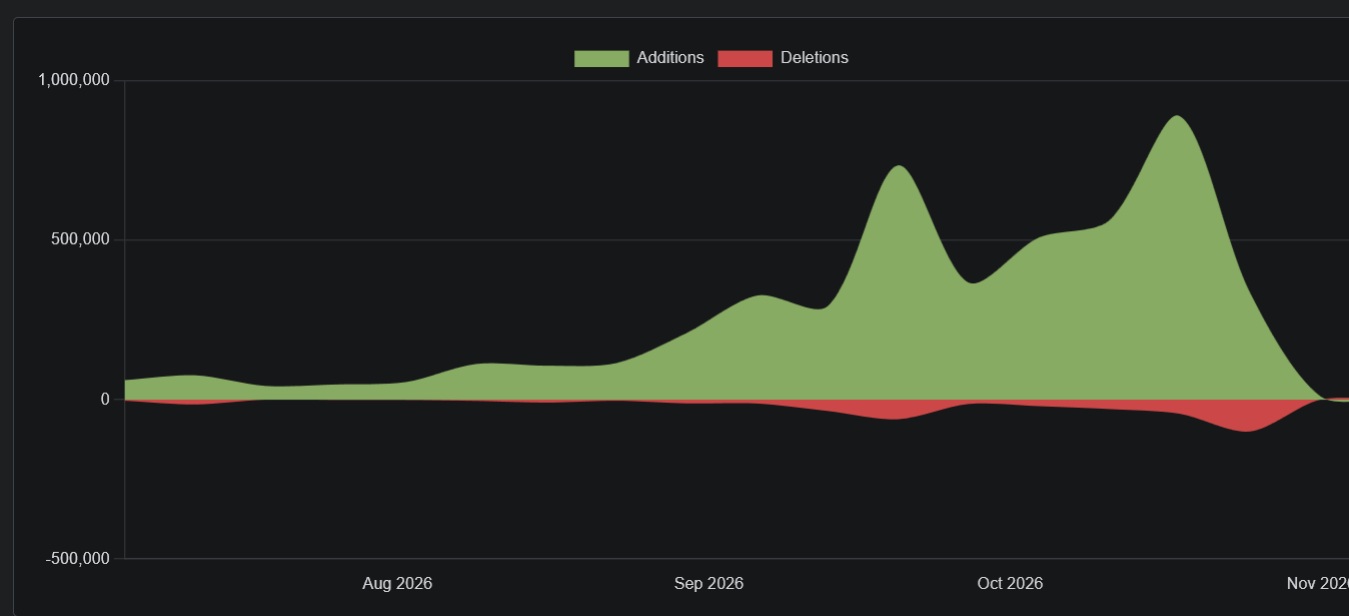
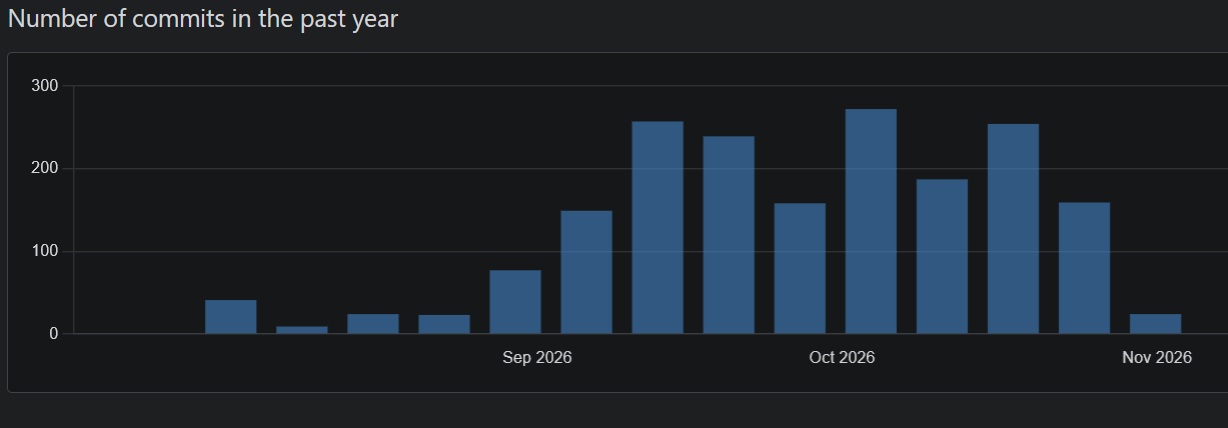
Data is gold; the data shows there's a new workflow pattern here. Hopefully others with similar symptoms can find this useful. After walking through this door to a better me, I'm never going back to the dated ADD/ADHD mindset.
Attention Shaming and Stealing Culture
I'm not a sociologist/pyschiatrist/physcologist/researcher but I'll share my opinions. The first three things are keeping ADD/ADHD adults stuck in the "attention shaming" framing and the last one imho is making my ADD/ADHD worse every day:
1. Research hasn't moved. ADD/ADHD research has stagnated over the last 20–30 years. The answer I hear is still chemical — alter the brain until the symptom goes away — not a rethinking of how the mind works or trying to leverage how it operates naturally.
2. Stigma lives in the room. From the classroom to office meetings, the social/cultural message has been consistent: your attention is the problem, and it's on you to fix it. I spent my life internalizing that message, and I do not take drugs to own my thoughts.
3. The cost compounds. Every year of fighting attention instead of working with it is another year I wonder "why can't I get that project/task done?". The todo list never shrinks; it gets longer.
4. There are more distractions. We have too many devices, screens and too many software applications optimized to take our attention. How many hours a day are you on your phone vs 10 years ago? How many hours are you looking at any screen vs 10 years ago? How many hours do you spend in deep focus not distracted by a screen vs 10 years ago.
Productive ADD/ADHD Tactics
I think of ADD/ADHD as a spectrum, like autism. What works for my brain will not work for every brain on the spectrum. Treat what follows as a starting pattern, not a prescription.
Here's my approach for converting my fragmented attention into shipped work, four tactics at a time.
1. Capture instantly. The instant my mind jumps to a new idea, I write it down — a sentence, not an essay. Some of these go nowhere. Many turn out to be adjacent things I'll need in the next few hours to days, because my brain doesn't think linearly. I convert that ADD/ADHD stray idea into a scoped AI prompt: one sentence and something else starts tackling the work. I love not losing my thoughts! I refer to this as a 30-second rule for prompting.
2. Ideate instead of deep-think. My brain isn't a fast deep thinker. It iterates — over an idea, the upstream and downstream needs, and use cases. I can spam many questions into an ai an rapidly learn and absord ideas with this technology because of my mind's non-linearity. It's not a flaw once you stop expecting depth; it's the fastest way to scope a problem. Thinking through use cases up front means I can queue up research, ideation, and prototype prompts in one pass, without losing a work thread. From the data, it looks like this is a faster way to build than I could do by myself (and for me the end results are usually better).
3. The 30-second prompt rule. If an idea hits me, I write it down in a chat or todo in under 30 seconds — long enough to scope it, short enough that I don't fall into an ideation spiral/rabbit hole and derail myself. The goal is queue a high level task description aka a rough idea, not a finished thought. From what I see, it's faster to build with a rough idea than to keep fixing that "perfect" prompt.
4. Queue, don't to-do list. A to-do list is a graveyard for scattered brains. A queue is different: it's an ordered pipeline of scoped AI prompts tied to one central topic. I'm constantly queueing tasks around the central problem, so I understand and prototype a new solution as fast as possible — and the "new idea" energy gets spent on the current thing instead of escaping it.
My day job is to feed the queue, not to finish the work. The AI does the deep work. I do the fast, iterative thinking and together we specialize.

Data-Driven Results
Talk is cheap; data is gold.
Here's the data behind the reframe — from my own logs, not a study.
Before (pre-AI, last 2 decades of my career):
- 40k–80k lines of high-quality software per six months
- Multiple abandoned projects per quarter
- Constant "new idea" churn
After (AI-engaged, last six months):
- 500–900k lines per week
- ~5M lines total in six months
- Queue-driven, small prompts, high iteration speed
- Rapid tool-calling RLHF with >30,000 tool calls a week with local AI models
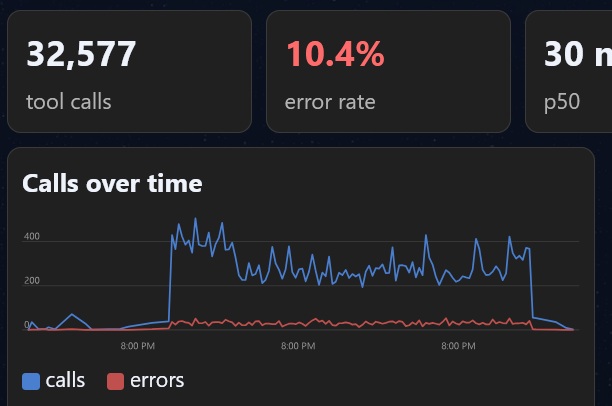
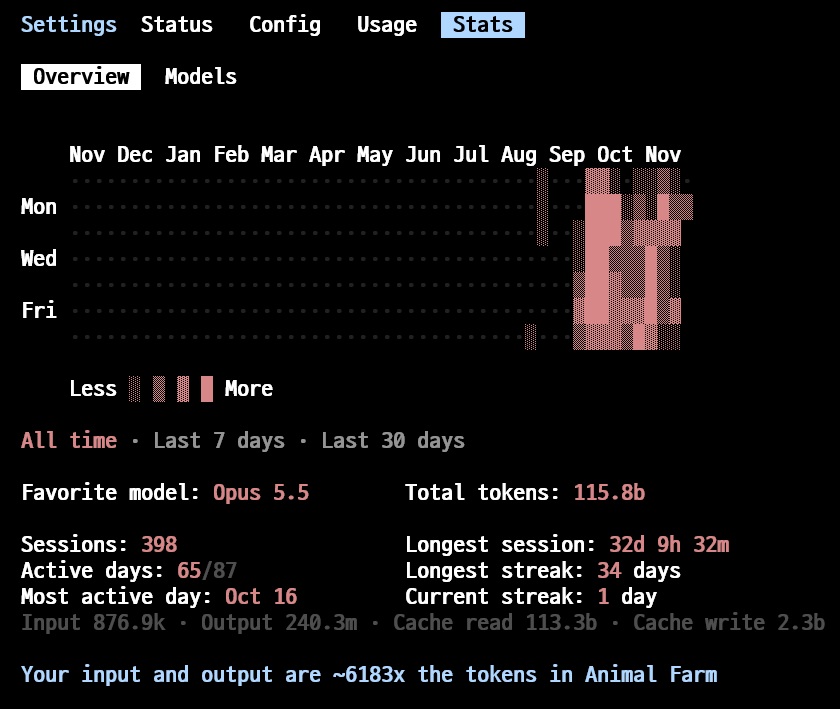
Example: This blog I built with claude code and my local ai to help scaffold, design, prototype and develop code my local AI models struggle with. So far I have used >115 billion tokens in under 4 months with a 32-day agentic coding streak.
How? Here's my approach to using AI with my ADD/ADHD mind:
1. I stopped trying to be a deep thinker. I am a prompt writer. The 30-second rule is the whole trick — it converts that "shiny object" in my mind into scoped work before the idea goes away.
2. I queued instead of planning. I find planning requires deep-focus for me, and this can really slow me down. Instead I ask the ai for a plan and even if it is terrible, I have something to start with. Getting started is the easier part because there's no such thing as writer's block for me now.
3. I let the AI hold the thread I can't. The AI tracks upstream/downstream/plan context across hours and days. I just keep feeding it. When my attention jumps, the work doesn't stop. We both keep moving together instead of one of us slowing the other down.
(These numbers are from my own working logs, not an independent measurement. Your mileage on the spectrum will vary.)
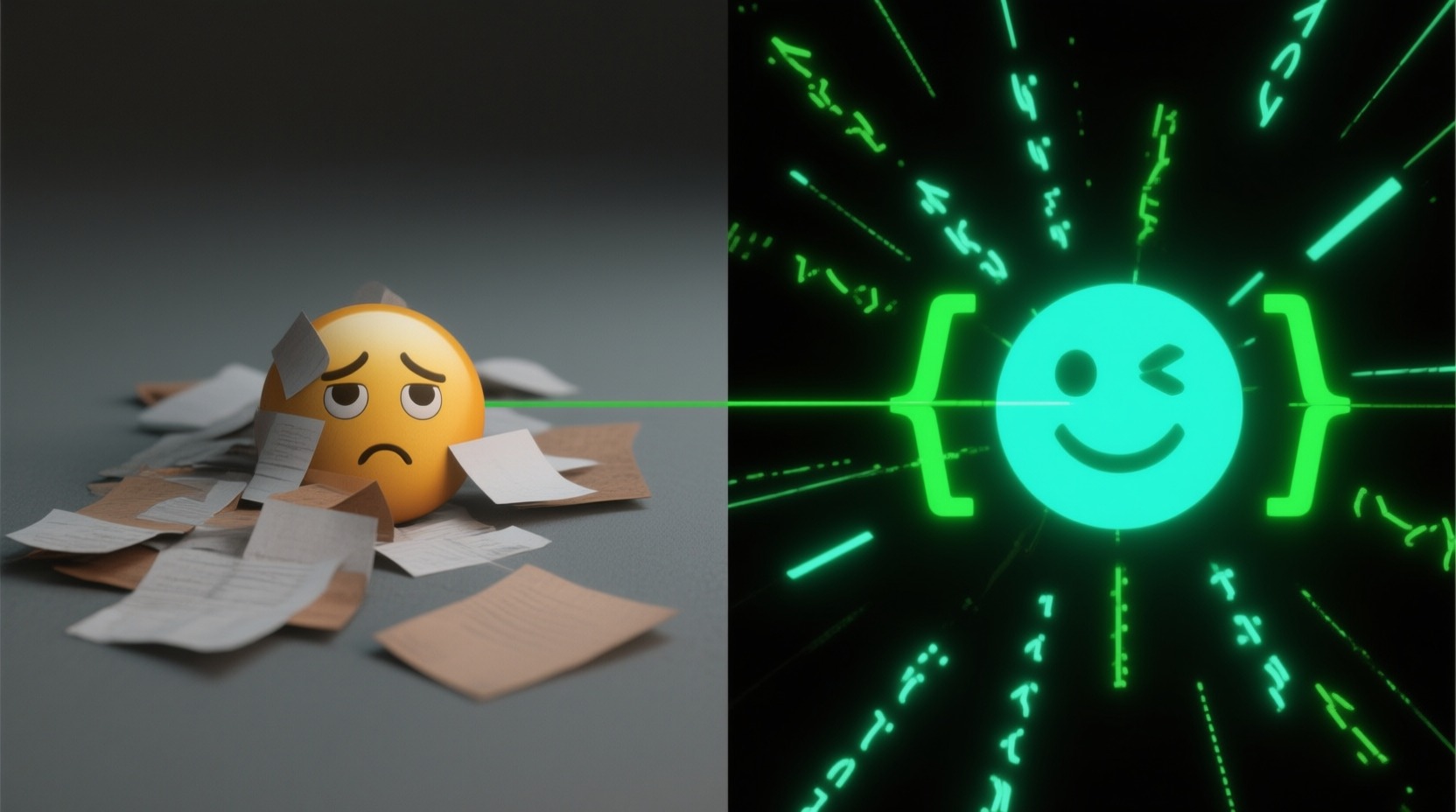
How do I get started?
AI can amplify what you already are...
- Using many small structured requests. If you're disciplined, AI makes you faster. If you're scattered, AI makes you more scattered — just with better tools. That's the risk I hit in week one. I'd queue 40 prompts, lose the thread on the 6th, and end up with 40 half-baked ideas and no working thing. It took me about two years to get good at prompting. I can usually handle about 20-30 tasks at the same time right now, but initially it was about 3-5. The advice I can say is try to structure the prompts into an order answering: what, how, why, where. If you are in a rush, the what is usually enough of a thread to get started and you can reread your prompt later to refresh.
- In-flight prompt grouping. I group tasks so the ai can handle related workloads faster. Once I started hitting >10 concurrent tasks I realized I had duplicate agents changing/stomping the same files at the same time causing work loss. I had to start grouping up prompts and routing prompts to agent(s) that are already working on the same related work. I have obvservered that a grouped task will get done faster and cheaper asking the ai working on a similar topic to tackle these new task(s) as well.
Conclusion
Forty years fighting ADD/ADHD for my attention was exhausting compared to the delight over the last year working with AI.
I'm at the point with this approach that I think people who have ADD/ADHD may be more ready for AI adoption than those with "normal" attention, and the reason is because an ADD/ADHD mind is always churning out new ideas and supressing them. Now we have teams that can build and chase deep ideas while our minds race on to the next topic.
If you take one thing from this post, let it be the 30-second rule: when your brain throws an idea at you, scope it in under 30 seconds and put it in the queue. That single habit is my biggest gain todate for converting my scattered attention into productive, measurable work.
To me, the superpower isn't the AI. The superpower is a brain conditioned to notice attention switching and to route those thoughts into a structured AI prompt that can do the work for you because my mind is already on the next idea.
Thanks for your time,
Jay
Call to Action
This is not medical advice
The only thing I'd recommend is a one-week trial: pick one project, describe what/how/why/where and run the 30-second prompt rule for seven days. Keep a log of what got queued, what got built, and where you lost the thread. Try to queue up and group AI chats as best as you can. Then look at the numbers. Talk is cheap; data is gold. After the week, check your git repo stats and compare to see how you did.
If it doesn't work for you, that's fine — the data is still useful because it tells you which of these tactics fit and which don't. One size does not fit all here and I wish we had more formal research on these topics instead of ancedata like this.